Color Fading of cotton textile due to storage

Color fading in cotton textiles is a common problem frequently faced by the garment industry. Often, garment workers mistakenly identify this defect as uneven dyeing, when in fact it is not. The garment production team tends to blame the fabric inspection department. However, if you consult the fabric inspection team, they’ll explain that no such defect was visible during inspection.
The actual cause is damage resulting from exposure to sunlight and heat under humid conditions. If reactive-dyed fabric comes into direct contact with polythene packaging, chemical reactions—particularly photodegradation and oxidation—can lead to discoloration, such as yellowing or fading
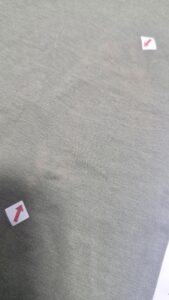
The color discharge in reactive-dyed fabric when packed in polythene and exposed to sunlight could be due to a few chemical and physical interactions:
- Heat Buildup: Polythene can trap heat, creating a localized high-temperature environment. This may accelerate dye degradation or destabilize the dye-fiber bond.
- Photochemical Reaction: Sunlight, especially UV rays, can trigger photochemical degradation of dyes. The polythene might act as a lens, intensifying exposure and causing accelerated fading.
- Chemical Interactions: Some dyes or residual chemicals in the fabric may react with plasticizers or stabilizers in the polythene, leading to a breakdown of the dye.
- Moisture & Oxidation: If any moisture gets trapped inside, combined with heat, it can create oxidative conditions that weaken the dye fixation on the fabric.
It is seen that blues and greens often contain dye components that are more sensitive to photochemical reactions, leading to fading or discharge. In this process, blue dyes get discharged, and fabric turns to an orange tone.
As a fabric manufacturer, there is very little that a dyeing master can do. But applying dye fixatives can help up to a certain limit. Sometimes anti-ozone fading chemicals also help to avoid such reactions.
Store Fabrics Properly—Avoid direct sunlight exposure during storage and transportation. The best solution for precaution is to use opaque or tinted packaging material.
Above is my thinking on this problem. While there is some other opinion about this defect from other experts, someone wrote to me as below.
Twenty-five years ago, the frequency of fabric or garment yellowing while in storage markedly increased. This was a particular problem for white and pastel shades. The problem was not particularly uniform, in that, within a carton of rolls of fabric, some rolls would exhibit severe yellowing while other rolls showed no yellowing at all. After many attempts to isolate and identify the problem over several years, researchers determined the source of the problem to be what is now known as phenolic yellowing resulting from fabrics wrapped in polyethylene film or bags. Many reports and papers have been published that explain the chemistry and reaction mechanisms of the yellowing formation. However, the essence of these studies has shown that phenolic antioxidants, most notably butylated hydroxytoluene (BHT), blended into the polyethylene film as a protectant and preservative, react with nitrogen dioxide from atmospheric pollution to form yellowing on the fabric surface. This yellowing can be in patches and is normally reversible. It often can be removed by an acidic scouring of the fabric or exposure of the fabric to direct sunlight. This phenolic yellowing has since been discovered to be much more widespread throughout the fiber-textile-cut & sew-retail chain than anyone initially believed. For instance, these phenolic antioxidants have been found in polyethylene wrap and bags, cardboard, brown paper, and other wrapping and packaging materials. In textile processing, these antioxidants have been used as additives in the fiber extrusion process, as fiber finish additives, and as preservatives in textile softeners, coning oils, knitting lubricants, and various other textile finishes. In the cut and sew industry, these phenolic antioxidants have been found in foam paddings, interlinings, fabric adhesives, and stitch lubricants. Obviously, to prevent this type of fabric yellowing, materials should be chosen that do not contain these phenolic antioxidants. However, because of the widespread use of these compounds in many necessary textile auxiliaries and supplies, it becomes difficult to completely eliminate these antioxidants from all potential exposure scenarios. Therefore, to minimize yellowing in storage, warehouse areas should be well ventilated to remove nitrogen dioxide and temperature controlled